
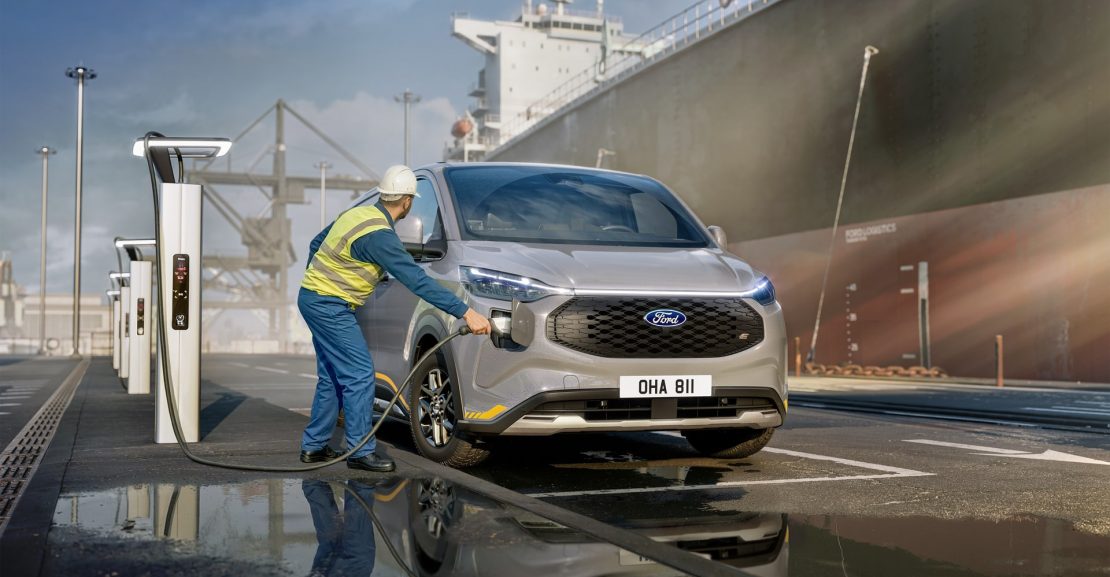
The question comes up in every workshop, forum, and coffee shop conversation with self-employed people: what kind of engine lasts the longest in a work van? And there's no single answer. It depends on how many kilometers you put on each year, whether you enter a Low Emission Zone daily, whether you do urban deliveries, or whether you're covering 800 km on the highway to deliver materials to a construction site on the other side of the country.
Let's get down to brass tacks, not empty promises. Because making the wrong choice here isn't like choosing the wrong family car—here, your profit margin is at stake.
What do we mean by "reliable mechanics" in a commercial van
Reliability isn't just about "not breaking down." It's about total cost of ownership (TCO), service availability, residual value, and, most importantly, downtime. A van out of service is lost revenue. It's that simple.
When we talk about the most reliable work van mechanics , we consider four variables: engine durability for over 300.000 km, cost of scheduled maintenance, a nearby network of repair shops, and compliance with upcoming regulations. If one of these four is lacking, the others don't compensate.
Diesel: the king who refuses to abdicate
Even today, the durability of diesel vans is the benchmark against which everything else is measured. Well-maintained, state-of-the-art 2.0-liter engines can easily surpass half a million kilometers. Of course, this requires AdBlue, demanding particulate filters, and maintenance that is no longer as cheap as it was ten years ago.
For intercity routes, heavy goods transport, and mileage exceeding 40.000 km/year, it remains the most sensible option. The problem lies elsewhere: Low Emission Zones (LEZs). If your route passes through Madrid Central or the Eixample district, a Euro 6 diesel will suffice today, but the outlook for 2030 is bleak.
Ford Transit Custom — from €32.500
The benchmark for the mid-size segment in Spain. The 2.0 EcoBlue version with 136 hp is the best-selling among self-employed drivers, and for good reason: real-world fuel consumption of 7,5 l/100 km fully loaded, a Ford Pro service network throughout the peninsula, and a strong resale value.
| Power KW | HP power | Average speed | Autonomy | Consumption | Golden Label | Fuel Efficiency: |
|---|---|---|---|---|---|---|
| 100 kW | 136 CV | 90 km/h | ~ 950 km | 7,5 l / 100 km | C | Diesel |
Renault Trafic — from €30.900
The Trafic dCi 150 is a classic in Spanish distribution. Less refined than the Transit, but with significantly lower maintenance costs and proven reliability in courier and construction fleets.
| Power KW | HP power | Average speed | Autonomy | Consumption | Golden Label | Fuel Efficiency: |
|---|---|---|---|---|---|---|
| 110 kW | 150 CV | 88 km/h | ~ 900 km | 7,8 l / 100 km | C | Diesel |
Volkswagen Transporter — from €34.800
The T6.1 with the 150 hp 2.0 TDI engine is the "premium" option in the commercial diesel range. You pay the Volkswagen premium, that's true. But the finish, ergonomics, and gearbox durability justify the extra cost if you're going to put 300.000 km on it.
| Power KW | HP power | Average speed | Autonomy | Consumption | Golden Label | Fuel Efficiency: |
|---|---|---|---|---|---|---|
| 110 kW | 150 CV | 92 km/h | ~ 950 km | 7,6 l / 100 km | C | Diesel |
The electric version: brilliant in the city, uncomfortable on the highway
The choice between a diesel or electric van ceases to be a dilemma once you define its intended use. For urban deliveries with daily routes of 120-180 km and a return to base to charge, the electric van wins hands down. Fewer moving parts, 40% lower maintenance, a zero-emissions sticker, and free access to any current or future Low Emission Zone.
The low running costs of an electric van are its biggest selling point: no oil changes, no clutch, no turbo, no AdBlue. Brakes last longer thanks to regenerative braking. But there's a catch: battery degradation after 200.000 km is still uncertain, and the residual value after 5 years remains a gamble.
Peugeot e-Expert — from €42.900
The e-Expert with a 75 kWh battery has a WLTP range of 330 km. In real-world urban delivery, it achieves 240-260 km, sufficient for 90% of courier routes. It features 100 kW fast charging and a Stellantis network that is already starting to catch up.
| Power KW | HP power | Average speed | Autonomy | Consumption | Golden Label | Fuel Efficiency: |
|---|---|---|---|---|---|---|
| 100 kW | 136 CV | 75 km/h | 330 km | 25 kWh / 100 km | ZERO | Electric |
Mercedes-Benz eVito — from €47.500
More expensive, yes, but with the Mercedes Pro network behind it and a 60 kWh battery that performs well in cold weather—something that matters more than it might seem in northern Spain. For medium-sized fleets with a maintenance contract, the total cost of ownership (TCO) is surprisingly good.
| Power KW | HP power | Average speed | Autonomy | Consumption | Golden Label | Fuel Efficiency: |
|---|---|---|---|---|---|---|
| 85 kW | 116 CV | 78 km/h | 314 km | 26 kWh / 100 km | ZERO | Electric |
The hybrid: the one that almost no one really offers
Let's be honest. In the commercial work van market, hybrid van reliability is still a work in progress, because the actual supply in Spain is limited. Pure HEVs with Toyota architecture are the most mature.
Toyota Proace — from €36.700
The Proace shares a platform with the Peugeot Expert, and in Spain it's primarily offered in diesel and electric versions. Toyota is gradually introducing its hybrid architecture into commercial vehicles. For mixed city-highway use with 20.000-30.000 km/year, the hybrid option makes sense—especially due to the ECO label and lower maintenance costs.
| Power KW | HP power | Average speed | Autonomy | Consumption | Golden Label | Fuel Efficiency: |
|---|---|---|---|---|---|---|
| 106 kW | 144 CV | 85 km/h | ~ 800 km | 6,8 l / 100 km | ECO | Hybrid |
Summary table: what to choose according to your profile
| Córdoba | Fuel Efficiency: | Autonomy | Golden Label | Better for | L/P reliability score |
|---|---|---|---|---|---|
| Ford Transit Custom | Diesel | 950 km | C | Intercity, work | 9/10 |
| Renault Trafic | Diesel | 900 km | C | Mixed cast | 8/10 |
| Volkswagen Transporter | Diesel | 950 km | C | High mileage | 9/10 |
| Peugeot e-Expert | Electric | 330 km | ZERO | Urban distribution ZBE | 8/10 |
| Mercedes-Benz eVito | Electric | 314 km | ZERO | Premium urban fleet | 8/10 |
| Toyota proace | Hybrid | 800 km | ECO | Mixed use 20-30k km/year | 7/10 |
Our verdict by use case
If you drive more than 40.000 km/year, mostly on highways with occasional city driving, the Euro 6d diesel is still the best engine for a commercial van . Period. Electric vehicles don't yet compensate for the charging time on the road.
If your business involves urban deliveries with return trips to base , an electric van is the answer. Unbeatable cost per kilometer, zero issues with Low Emission Zones, and a long-lasting work van with fewer potential mechanical breakdowns.
If you're somewhere in between—15.000 to 30.000 km/year, mixed use—a hybrid makes sense, even though the market in Spain is limited. It remains to be seen whether manufacturers will take this segment seriously.
FAQ
How many kilometers can a modern van diesel engine last?
A well-maintained modern 2.0 diesel engine easily exceeds 400.000-500.000 km. The key is to respect oil change intervals (every 20-30.000 km), take care of the particulate filter by avoiding exclusively short journeys, and not neglect the AdBlue.
How much does the battery of an electric work van degrade?
Most manufacturers guarantee 70% capacity after 8 years or 160.000 km. In real-world urban delivery use with mostly slow charging, degradation is around 2-3% per year. Frequent fast charging accelerates this process.
Is an electric van worth it if I drive less than 15.000 km per year?
Hardly. The higher purchase price compared to the equivalent diesel (€8.000-€12.000) is not recouped with that annual mileage, unless access to the Low Emission Zone is daily and critical to the business.
Which engine has the best resale value after 5 years?
Today, Euro 6d diesel vehicles from established brands (Volkswagen, Ford, Mercedes) maintain a better residual value. Commercial electric vehicles still lack sufficient historical data, and their five-year value depends heavily on how battery technology evolves.