
There's a huge difference between the fuel consumption figures promised in the brochure and what the trip computer shows when you're driving a fully loaded van, crossing the A-3 highway with a crosswind at 120 km/h. Self-employed people who practically live on top of the driver's seat know this better than anyone: every tenth of a liter adds up to hundreds of euros a year.
This ranking is precisely about that: medium-sized diesel vans with the best real-world fuel consumption, measured on long journeys with a load, not WLTP figures rounded up for the brochure. We've focused on models you can buy today at a Spanish dealership, with current engines and proven reliability from fleet use.
Why real-world fuel consumption matters more than WLTP for those who live on the road
The WLTP cycle is performed on a test bench, with controlled temperature and no one present. A nice laboratory exercise. But an installer leaving Valencia with 600 kg of material at 6 a.m. with 4 degrees Celsius outside is going to see something very different on the screen.
In practice, the difference between the WLTP figure and the real-world fuel consumption of a fully loaded medium-sized diesel vehicle is around 15-25%. And that percentage, multiplied by 50.000 or 60.000 km per year, is the difference between ending the year with a profit or eating up all your earnings at the pump.
What do we mean by "actual consumption" in this ranking?
We're talking about the average achieved by fleets and individual users on mixed routes with medium loads (around 400-600 kg), highway cruising between 100 and 120 km/h, and some urban driving. This isn't data from a single test; it's a reasonable average you'll see if you drive like the self-employed drivers who read this.
Cost per kilometer: the metric that really matters
At €1,45/liter of diesel, every liter you save per 100 km translates to about €700-800 per year if you drive 50.000 km. Adding maintenance, resale value, and insurance, the real-world fuel consumption of a diesel van can tip the scales between two models that, on paper, appear identical.
How we compiled this ranking
We cross-referenced fuel consumption data reported by fleet managers, professional forums, and long-term tests with current availability in Spain. We excluded models no longer sold new and versions only available in other markets. We only included what a self-employed driver might need tomorrow.
Scoring criteria
Each model receives a score from 1 to 10 based on real-world fuel consumption, usable range on a full tank, historical reliability of the engine block, maintenance costs, and four-year resale value. The final score is a weighted average, with fuel consumption carrying the most weight—after all, that's the article's title.
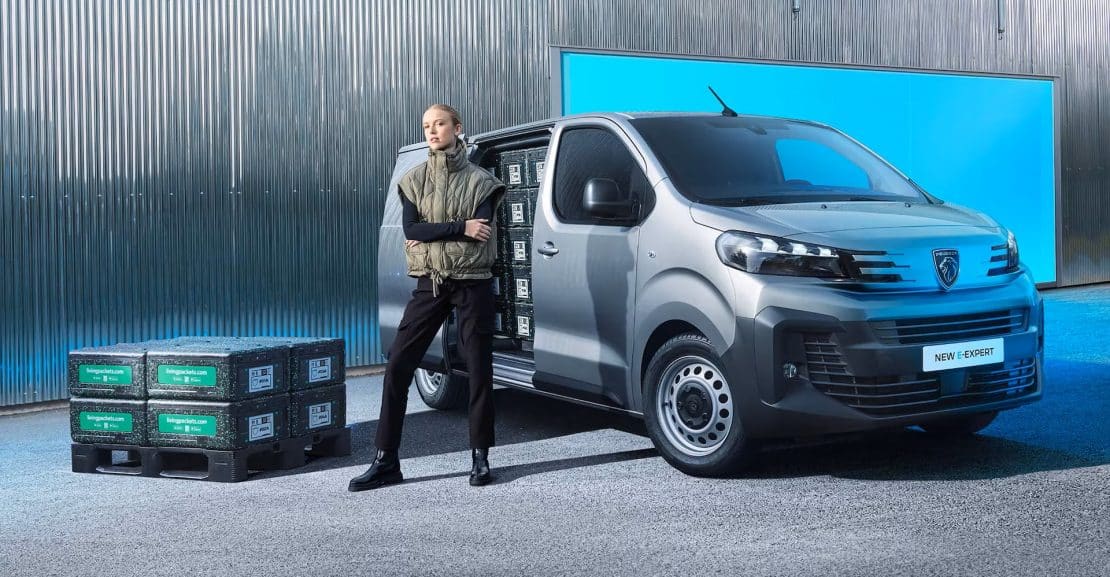
1. Peugeot Expert — from €30.500
The Expert with the 1.5 BlueHDi 120 hp engine is, in our opinion, the benchmark in its segment for pure fuel economy. On mixed journeys with a medium load, it achieves around 6,4-6,8 l/100 km in real-world driving, and with relaxed driving, we've seen sustained averages below 6. Its 69-liter tank allows for journeys of over 900 km without refueling. For those who make deliveries between provinces, that's invaluable.
However, the 120 hp version feels a bit underpowered if you're carrying a near-maximum load and frequently tackling mountain passes. For mostly highway driving, though, it's more than adequate.
| Power KW | HP power | Speed max. | Autonomy | Actual consumption | Golden Label | Fuel Efficiency: |
|---|---|---|---|---|---|---|
| 88 kW | 120 CV | 170 km/h | ~ 980 km | 6,5 l / 100 km | C | Diesel |
2. Citroën Jumpy — from €30.200
Mechanically, it's a close relative of the Expert, so the fuel consumption figures are almost identical: 6,5-6,9 l/100 km in mixed use with a load. The difference lies in the starting price—it's usually a bit more affordable—and in a suspension setup that I find slightly more comfortable on very long journeys. In our in-depth review, we already saw why it has won over installers and salespeople.
To each their own: a simple, understated interior, just the essentials. For many freelancers, that's enough.
| Power KW | HP power | Speed max. | Autonomy | Actual consumption | Golden Label | Fuel Efficiency: |
|---|---|---|---|---|---|---|
| 106 kW | 145 CV | 175 km/h | ~ 950 km | 6,7 l / 100 km | C | Diesel |
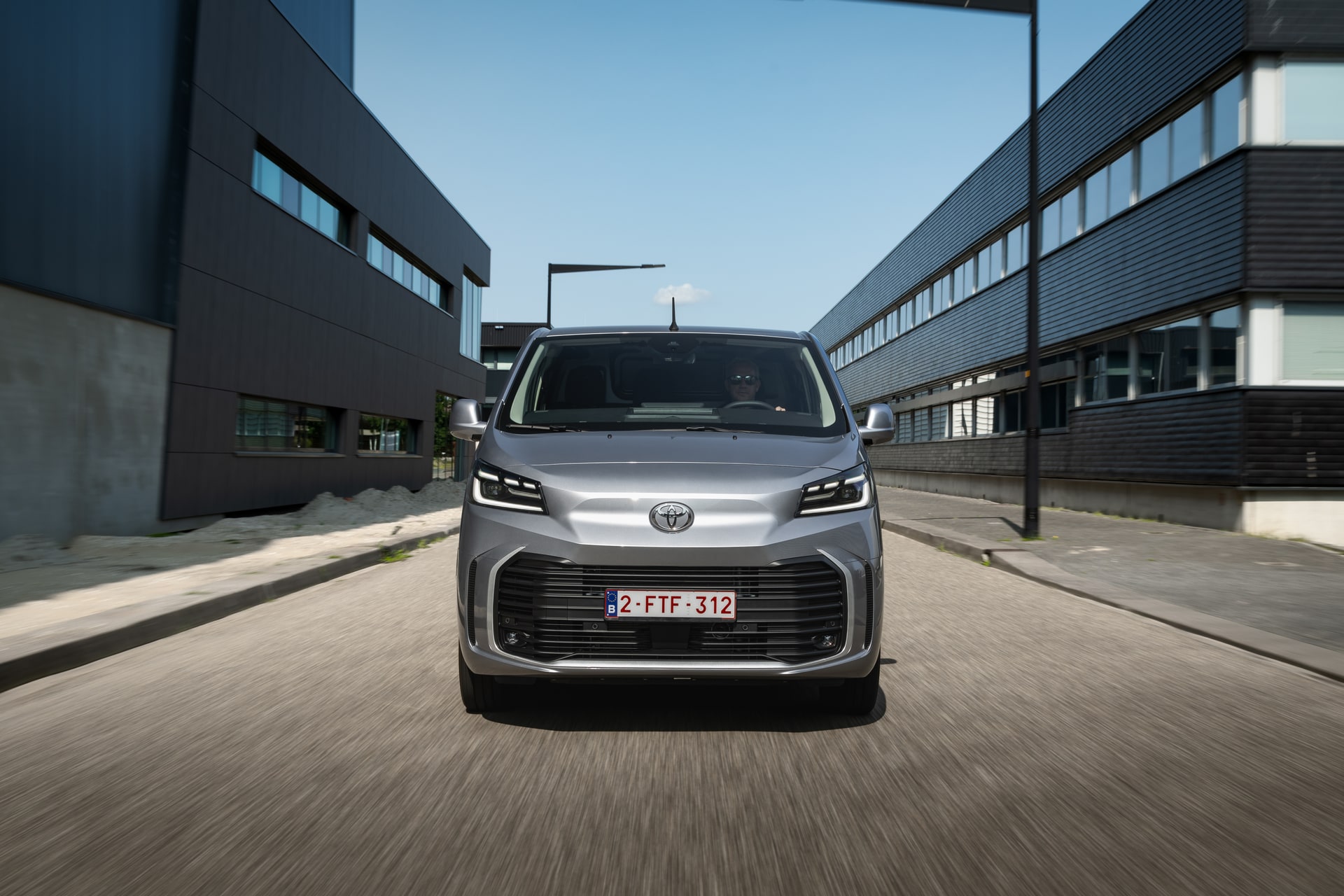
3. Toyota Proace — from €31.400
It shares a platform with the two previous models, but Toyota adds its own unique touch: an extended warranty of up to 10 years/1 million km if you keep the servicing done at their network. For a self-employed driver with a lot of driving, that's worth much more than a tenth of a liter on the fuel consumption display. In real-world figures, it achieves between 6,6 and 7,0 l/100 km, very much in line with the Expert and the Jumpy.
Japanese reliability, even though the engine block is French, is evident in the attention to detail in the assembly and in the almost complete absence of minor electrical issues that do appear in other versions of the PSA trio.
| Power KW | HP power | Speed max. | Autonomy | Actual consumption | Golden Label | Fuel Efficiency: |
|---|---|---|---|---|---|---|
| 106 kW | 145 CV | 175 km/h | ~ 940 km | 6,8 l / 100 km | C | Diesel |

4. Ford Transit Custom — from €32.800
The new generation Custom, with its 2.0 EcoBlue 136 hp engine, represents a significant leap forward. Real-world fuel consumption ranges between 7,0 and 7,5 l/100 km with an average load, slightly higher than the French trio, but the engine feels more ample on long highway journeys and offers more torque for overtaking with a full load. If you cover many kilometers at a constant 120 km/h, the difference in consumption narrows because the engine operates more efficiently.
In its duel with the Transporter T7, it was already clear that the Ford plays the long-distance comfort card like few others.
| Power KW | HP power | Speed max. | Autonomy | Actual consumption | Golden Label | Fuel Efficiency: |
|---|---|---|---|---|---|---|
| 100 kW | 136 CV | 170 km/h | ~ 950 km | 7,2 l / 100 km | C | Diesel |
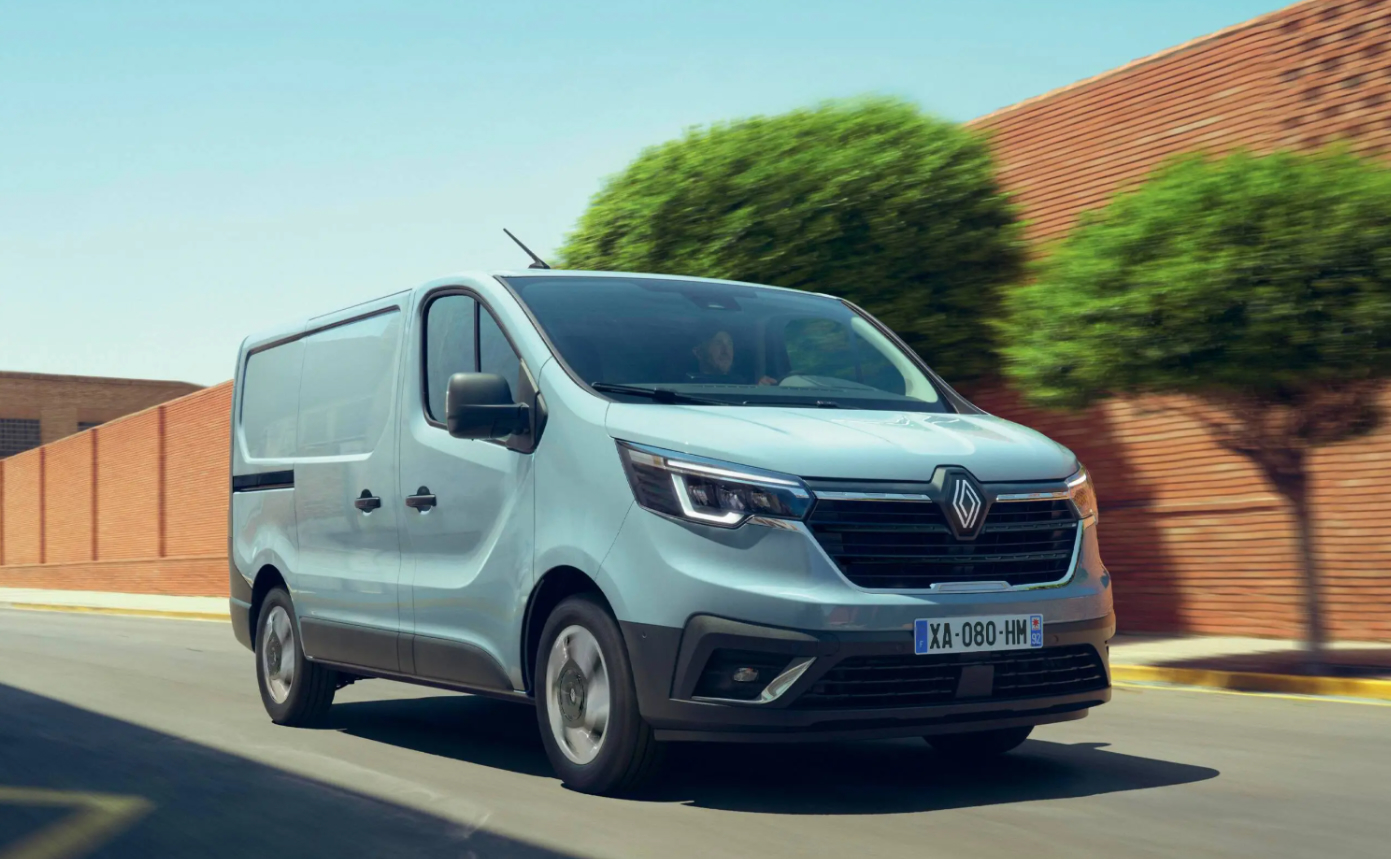
5. Renault Trafic — from €29.900
The Blue dCi 150 in the Trafic achieves around 7,0-7,4 l/100 km in real-world professional use. It's not the most fuel-efficient, but it compensates with a very competitive starting price and a network of workshops—including specialized Pro+ workshops—that provide quick service. With an 80-liter tank, refueling stops are infrequent, and real-world range is close to 1.100 km if you drive with a light touch.
To top it all off, the Trafic's residual value holds up well, something that becomes noticeable when it's time to replace it.
| Power KW | HP power | Speed max. | Autonomy | Actual consumption | Golden Label | Fuel Efficiency: |
|---|---|---|---|---|---|---|
| 110 kW | 150 CV | 178 km/h | ~ 1.080 km | 7,3 l / 100 km | C | Diesel |
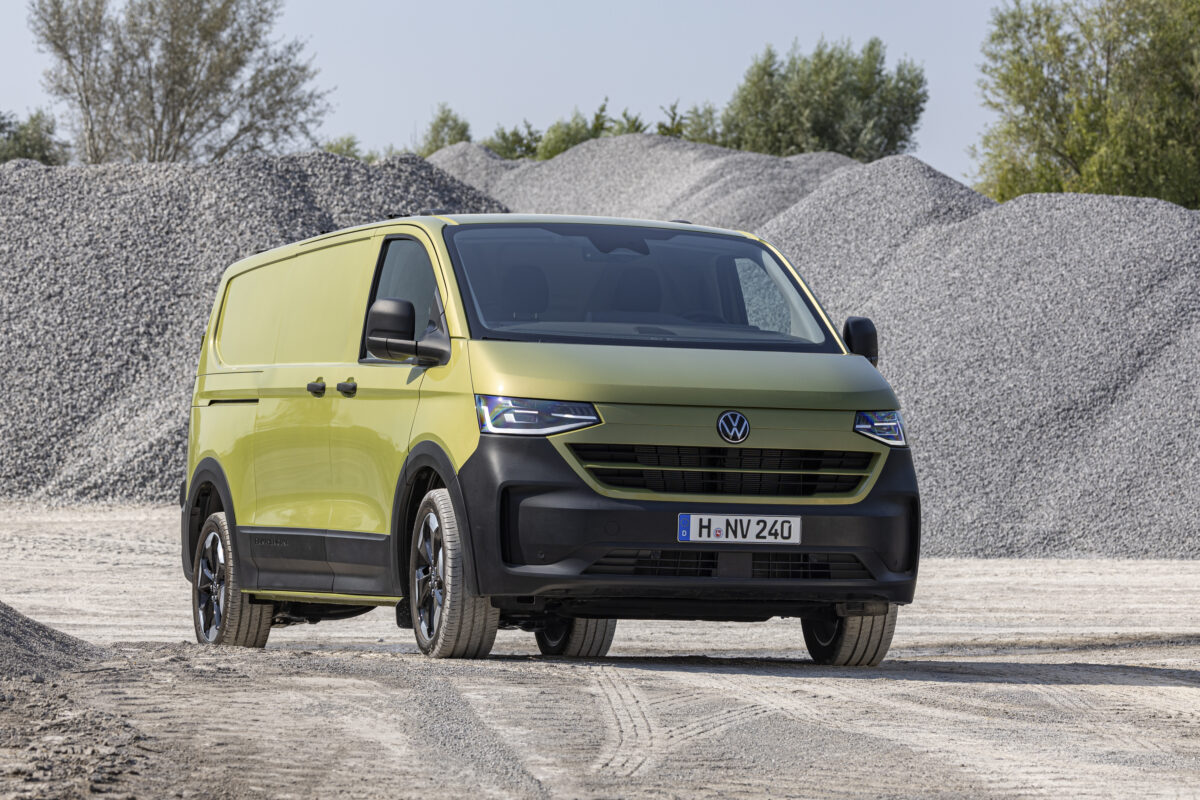
6. Volkswagen Transporter T7 — from €36.500
The new T7 with the 2.0 TDI 150 hp engine achieves a real-world fuel consumption of 7,2-7,7 l/100 km. It's not the most fuel-efficient in the ranking, but it handles best at high speeds and is least affected by maximum load. For self-employed drivers who cover a lot of international mileage or who prioritize driver comfort above all else, it remains a benchmark. Expensive to buy, yes, but with a resale value that softens the blow.
| Power KW | HP power | Speed max. | Autonomy | Actual consumption | Golden Label | Fuel Efficiency: |
|---|---|---|---|---|---|---|
| 110 kW | 150 CV | 180 km/h | ~ 1.000 km | 7,5 l / 100 km | C | Diesel |
Summary table and scoring
| Córdoba | CV | Actual consumption | Autonomy | price from | Punctuation in Spanish |
|---|---|---|---|---|---|
| Peugeot Expert | 120 | 6,5 l / 100 | 980 km | 30.500 € | 9,2 |
| Citroën Jumpy | 145 | 6,7 l / 100 | 950 km | 30.200 € | 9,0 |
| Toyota proace | 145 | 6,8 l / 100 | 940 km | 31.400 € | 9,0 |
| Ford Transit Custom | 136 | 7,2 l / 100 | 950 km | 32.800 € | 8,6 |
| Renault Trafic | 150 | 7,3 l / 100 | 1.080 km | 29.900 € | 8,5 |
| Volkswagen Transporter T7 | 150 | 7,5 l / 100 | 1.000 km | 36.500 € | 8,3 |
Which one to choose according to your profile
If you drive more than 50.000 km a year on long journeys and are looking for the lowest cost per kilometer, the Expert or the Jumpy with the 1.5 BlueHDi engine are the obvious choices. If long-term reliability with high mileage is more your priority, the Proace is in a different league thanks to its warranty. And if long-distance driving comfort is your main concern, the Custom and the T7 are worth the extra cost.
FAQ
Which medium-sized diesel van has the lowest real-world fuel consumption in 2024-2025?
The Peugeot Expert 1.5 BlueHDi 120 hp leads with real averages between 6,4 and 6,8 l/100 km in mixed use with medium load, followed closely by the Citroën Jumpy and Toyota Proace, which share the same engine.
Is it worth paying more for a Volkswagen Transporter T7 if it consumes more fuel?
It depends on the use. If you drive a lot of kilometers at high speed with a full load, the comfort and resale value of the T7 make up for it. For mixed deliveries where cost per kilometer is a priority, an Expert or a Jumpy are more cost-effective.
How much can you save per year by choosing the most efficient van?
There's a one-liter difference between the Expert (6,5 l/100 km) and the T7 (7,5 l/100 km). At 50.000 km per year and €1,45/l, that's about €725 per year in diesel alone.
Do the Auto+ Plan subsidies apply to diesel vans?
The Auto+ Plan is primarily focused on electrification. Direct assistance is not usually available for new diesel vans; it's advisable to consult the official website for current terms and conditions.