
If you're self-employed and work in Madrid, Barcelona, Valencia, or any city with a well-established Low Emission Zone, the conversation about electrifying your van is no longer about whether it's worthwhile, but when and with which model. By 2026, the market has matured. There's a Zero Emissions label for almost any profession and budget, and real-world driving ranges—the kind that matter when it's raining and you're carrying 700 kg—finally allow you to finish your workday without breaking a sweat.
Why 2026 is the year to take the leap
The urban charging network has grown, prices have dropped, and the Auto+ Plan remains the key to saving several thousand euros on the final bill. Add to that the tightening of Low Emission Zone restrictions in more cities and the real energy savings compared to diesel: between 4 and 6 euros of "fuel" per 100 km, depending on the tariff. The numbers start to add up without any need for tricks.
However, it's not all good news. Payload remains the Achilles' heel compared to combustion engines, and fast charging times for large vans are still not on par with those of a premium electric car. You have to choose wisely.
What to look at before signing
WLTP range is a reference point, but this can be reduced by 20% to 30% if you're driving with a full load, in cold weather, or on the highway. Actual payload (the amount of cargo remaining after subtracting accessories and equipment) is also important. DC fast charging power—50 kW or more is the minimum reasonable requirement if you make more than one trip a day. And after-sales service is crucial: a van sitting idle is lost revenue, so the dealer network is just as important as the technical specifications.
To delve deeper into this calculation, you have a specific guide on real range and cost per delivery that complements what follows.
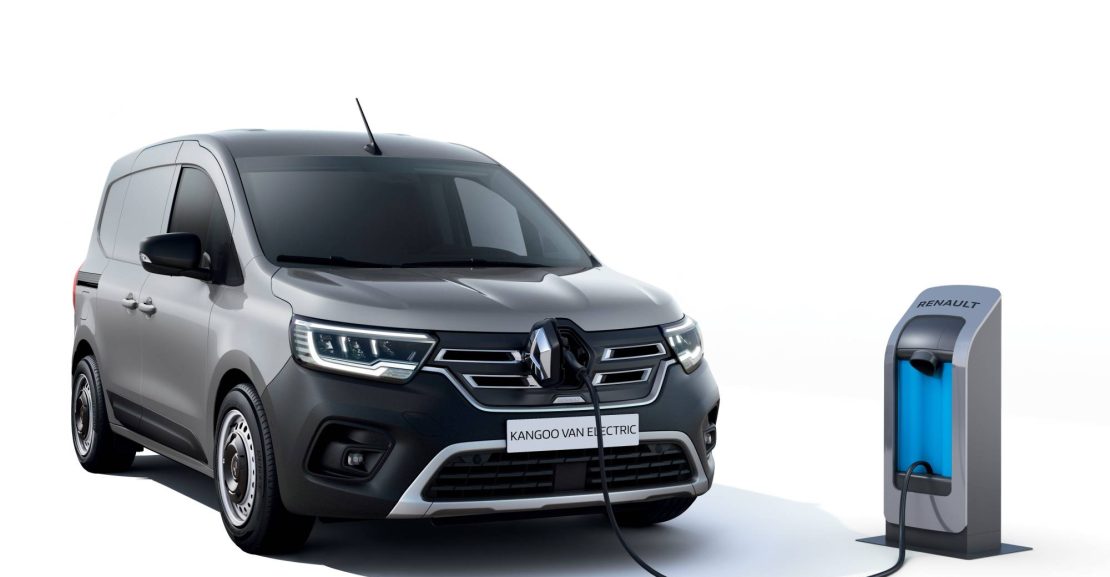
1. Renault Kangoo E-Tech — from €38.500
The electric Kangoo is the safe choice for the urban freelancer: plumber, electrician, light delivery driver, salesperson. It boasts a 45 kWh battery, a WLTP range of 285 km, and a payload of up to 615 kg in the van version. Its 80 kW DC fast charging is enough to replenish 80% of the battery in about 40 minutes. And Spain's after-sales network remains one of the most extensive—a crucial advantage when the nearest garage is 60 km away.
In our opinion, it's the most well-rounded in the small segment. It doesn't excel in any one category, but it doesn't fall short in any either.
| Power KW | HP power | Speed max. | WLTP autonomy | Consumption | Golden Label | Fuel Efficiency: |
|---|---|---|---|---|---|---|
| 90 kW | 122 CV | 132 km/h | 285 km | 18,7 kWh / 100 km | ZERO | Electric |
2. Peugeot e-Partner — from €36.900
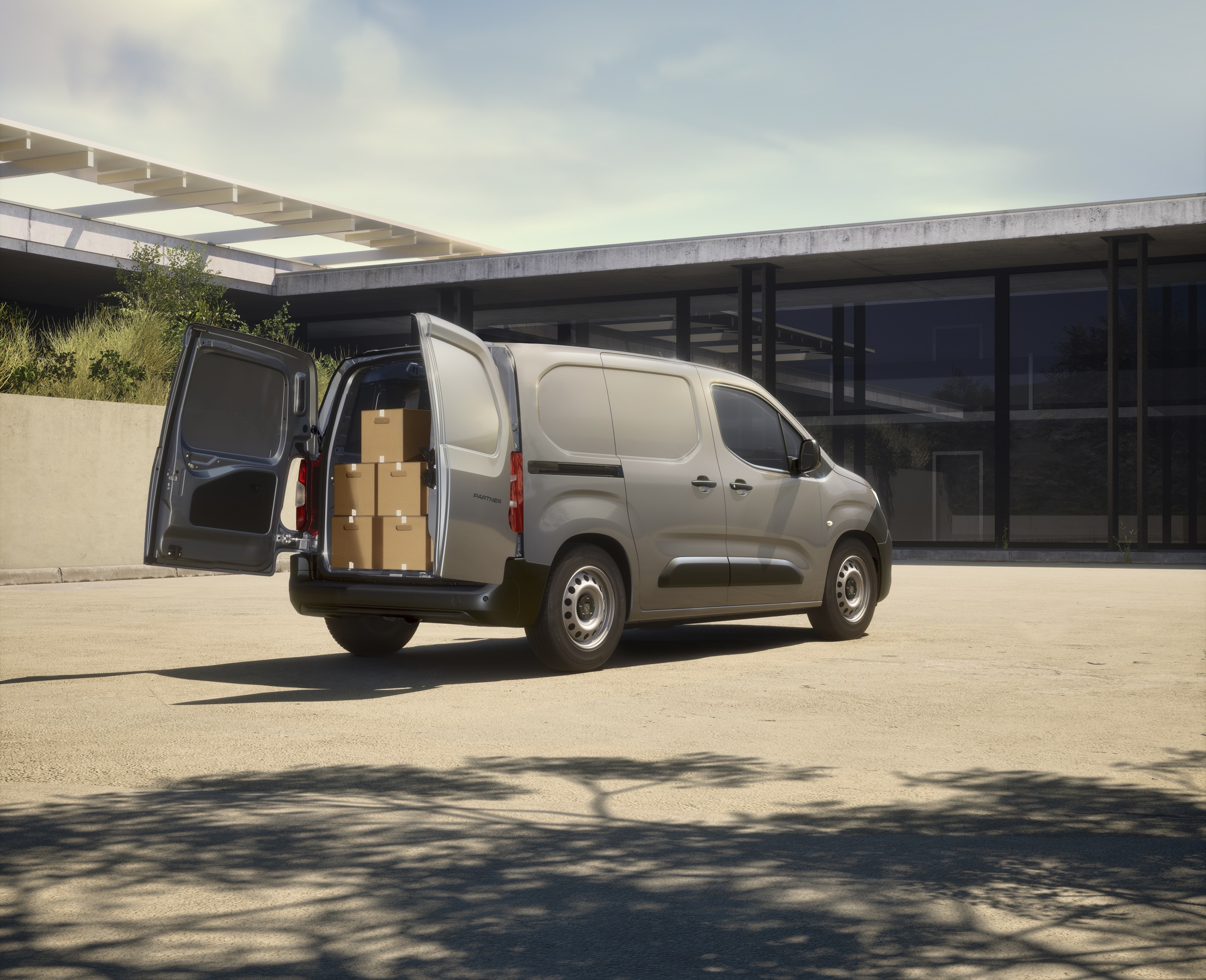
The e-Partner is Stellantis's compact offering, and with its updated 50 kWh battery, it achieves a WLTP range of 330 km. It boasts a very competitive payload of up to 800 kg and a cargo volume of 4,4 m³ in the standard version. Its strongest point is the spacious front passenger area: the i-Cockpit continues to be a mixed bag, but the driving position feels modern. It supports DC fast charging at 100 kW.
For a last-mile courier covering 100 to 150 km daily with frequent stops, it's one of the most well-rounded options on the market. It shares a platform with the Citroën ë-Berlingo and the Opel Combo Electric , which are valid alternatives if the price or dealership suits you better.
| Power KW | HP power | Speed max. | WLTP autonomy | Consumption | Golden Label | Fuel Efficiency: |
|---|---|---|---|---|---|---|
| 100 kW | 136 CV | 135 km/h | 330 km | 17,8 kWh / 100 km | ZERO | Electric |
3. Citroën ë-Berlingo — from €35.900
The pragmatic sister of the Stellantis trio. It shares its mechanics with the e-Partner but is usually found a bit cheaper and with slightly more understated finishes. Same 50 kWh battery, same motor, same official range of 330 km. Its softer suspension makes it especially comfortable on rough urban surfaces—Barcelona knows what I'm talking about.
For the self-employed person who values the euro more than the logo, it is the most rational of the three.
| Power KW | HP power | Speed max. | WLTP autonomy | Consumption | Golden Label | Fuel Efficiency: |
|---|---|---|---|---|---|---|
| 100 kW | 136 CV | 135 km/h | 330 km | 17,8 kWh / 100 km | ZERO | Electric |

4. Ford E-Transit Custom — from €52.000
Here we move up a class. The E-Transit Custom is a mid-size van designed for self-employed professionals with high-volume needs: air conditioning installers, light construction, catering, B2B delivery. It boasts a 74 kWh usable battery and a WLTP range of 337 km. Payloads exceed 1.000 kg in various configurations, and DC fast charging is available at up to 125 kW. Driving it feels more like a passenger car than a typical work van, which is a welcome change when you're putting in eight-hour days behind the wheel.
It's not cheap, but for those who will really put it to the test, it's one of the best age vehicles. The integration with Ford Pro for fleet management is a bonus if you start to grow.
| Power KW | HP power | Speed max. | WLTP autonomy | Consumption | Golden Label | Fuel Efficiency: |
|---|---|---|---|---|---|---|
| 160 kW | 218 CV | 145 km/h | 337 km | 22,5 kWh / 100 km | ZERO | Electric |
5. Mercedes-Benz eVito — from €55.000
The eVito Van is Mercedes' offering for those who want an electric mid-size van with a premium image and Mercedes after-sales service. With its 60 kWh battery, it achieves a WLTP range of around 260 km—not its strongest point—but it offers a payload of nearly 900 kg and up to 6,6 m³ of cargo space. It can be charged via DC fast charging at 80 kW.
It's worthwhile when brand image matters (weddings, VIP transport in the Tourer version, high-end services) or when you already have a Mercedes fleet and want to standardize maintenance. For pure delivery, there are more efficient options.
| Power KW | HP power | Speed max. | WLTP autonomy | Consumption | Golden Label | Fuel Efficiency: |
|---|---|---|---|---|---|---|
| 85 kW | 116 CV | 120 km/h | 260 km | 23,9 kWh / 100 km | ZERO | Electric |
Summary table and scoring
| Córdoba | WLTP autonomy | Useful load | DC Recharge | price from | Punctuation in Spanish |
|---|---|---|---|---|---|
| Renault Kangoo E-Tech | 285 km | 615 kg | 80 kW | 38.500 € | 8,5 |
| Peugeot e-Partner | 330 km | 800 kg | 100 kW | 36.900 € | 9,0 |
| Citroen ë-Berlingo | 330 km | 800 kg | 100 kW | 35.900 € | 8,8 |
| Ford E Transit Custom | 337 km | 1.100 kg | 125 kW | 52.000 € | 9,2 |
| Mercedes-Benz eVito | 260 km | 900 kg | 80 kW | 55.000 € | 7,8 |
FAQ
Which electric van is the best value for a self-employed person who drives 30.000 km per year in the city?
The Peugeot e-Partner and the Citroën ë-Berlingo are the benchmark for range, price, and payload ratio. With charging at a garage or docking station, the cost per kilometer is halved compared to an equivalent diesel vehicle.
Can I enter any Low Emission Zone (LEZ) with these vans?
Yes. All five have the DGT's ZERO emissions label, which gives free access to all Low Emission Zones in force in Spain, including Madrid Central and Barcelona's LEZ.
What subsidies are available for buying an electric van in 2026?
The framework is the Auto+ Plan, which replaces previous plans and includes specific aid for light commercial vehicles. Specific amounts and deadlines should be checked on the official website, as they are updated regularly.
How long does the battery of an electric van last under intensive professional use?
Manufacturers guarantee the battery for 8 years or 160.000 km with a minimum of 70% capacity. In real-world use, degradation in urban fleets is proving to be better than expected: around 10-15% at 150.000 km if excessive use of 100% fast charging is avoided.