
Talking about electric vans in 2024 is no longer just talking about the future. It's talking about monthly revenue, delivery routes entering and leaving Low Emission Zones every day, and a profit margin that hinges on every penny per kilometer. That's where the ZERO emissions sticker stops being just a green sticker and becomes a working tool—the one that lets you enter Madrid Central, Barcelona's Low Emission Zone, or Valencia's without checking the time.
The problem is that not all zero-emission electric vans perform the same. Between the most efficient and the most fuel-guzzling on the market, there are differences exceeding 30% in real-world consumption, which translates into hundreds of euros a month if you drive 150 km daily. We've ranked the five that, in our opinion, best combine efficiency, WLTP range, and payload for continuous professional use in Spain.
Why efficiency rules in an electric work van
An electric car consumes between 14 and 18 kWh/100 km. A commercial van, due to its aerodynamics and weight, rarely gets below 20. And that margin—four or five kWh per hundred kilometers—is what determines whether your day ends with 20% battery remaining or if you have to plug in at a client's location. For self-employed drivers with a fixed route, it's literally the difference between going home or finding a charging station.
The ZERO energy label, moreover, isn't determined by consumption: it's determined by technology. Any pure electric vehicle or one with extended range qualifies, but within the club there are those who squeeze every last kilowatt out of it and those who waste it.
How we ordered the ranking
Three key variables: WLTP energy consumption (kWh/100 km), real-world range in mixed driving conditions, and available payload. The indicative price and service network availability in Spain carry less weight, but they are still important. All models are available for purchase at Spanish dealerships today, with the Auto+ Plan applicable according to the current offer.
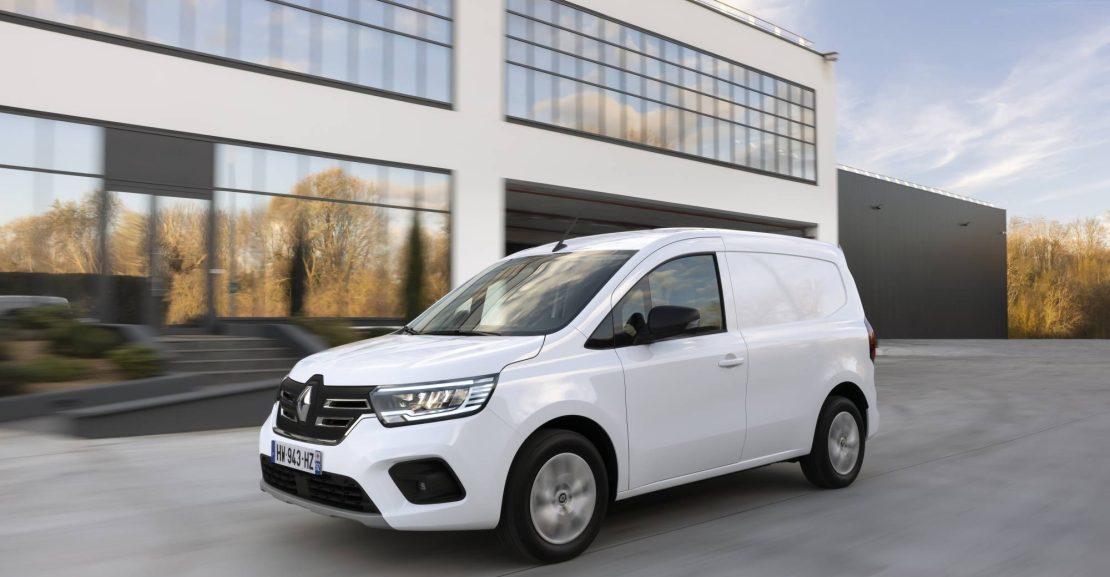
1. Renault Kangoo E-Tech — from €36.500
The Kangoo E-Tech is, in my opinion, the benchmark in the small van segment. Renault has been selling electric Kangoos for over a decade, and it shows: the package is finely tuned. It boasts a homologated consumption of 18,9 kWh/100 km, a usable 45 kWh battery, and a WLTP range approaching 300 km in the van configuration. In real-world urban deliveries, with frequent stops and efficient use of regenerative braking, we've seen figures below 17 kWh/100 km. That's almost 350 km of effective work before needing to recharge.
| Power | WLTP autonomy | Consumption | Golden Label | Fuel Efficiency: |
|---|---|---|---|---|
| 90 kW / 122 PS | 300 km | 18,9 kWh / 100 km | ZERO | Electric |
2. Peugeot e-Partner — from €35.900
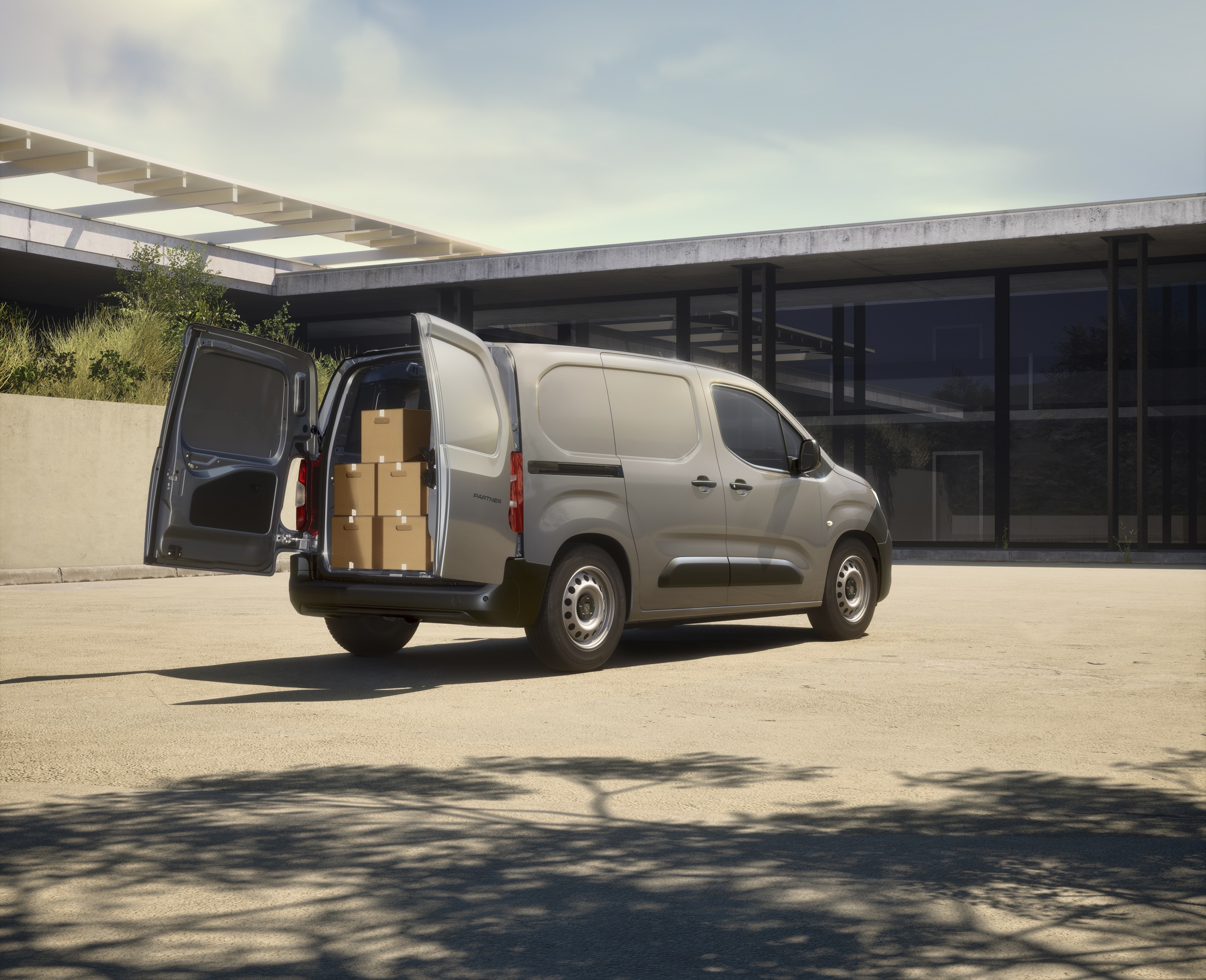
The e-Partner shares a platform with Citroën and Opel, but Peugeot has fine-tuned it for greater agility in the city. It has a 50 kWh battery, a WLTP range of 275 km, and a claimed consumption of 20 kWh/100 km. While not the most efficient on paper, it compensates with a payload of up to 800 kg and a cargo volume that holds its own against others in the segment. If your route combines urban driving with some short intercity sections, it's a good fit.
| Power | WLTP autonomy | Consumption | Golden Label | Fuel Efficiency: |
|---|---|---|---|---|
| 100 kW / 136 PS | 275 km | 20 kWh / 100 km | ZERO | Electric |
3. Citroën ë-Berlingo Van — from €34.700
It shares the same basic structure as the e-Partner, but with a more pragmatic approach and—this is what puts it here—a lower entry price. It boasts the same 20 kWh/100 km consumption and 275 km WLTP range. The ë-Berlingo Van is the sensible option for self-employed individuals who want to go electric without breaking the bank and without sacrificing a zero-emissions sticker. In our comparison of the three sister vehicles from the Stellantis group, we already saw that the differences between them are more about positioning than mechanics.
| Power | WLTP autonomy | Consumption | Golden Label | Fuel Efficiency: |
|---|---|---|---|---|
| 100 kW / 136 PS | 275 km | 20 kWh / 100 km | ZERO | Electric |
4. Ford E-Transit Custom — from €49.900
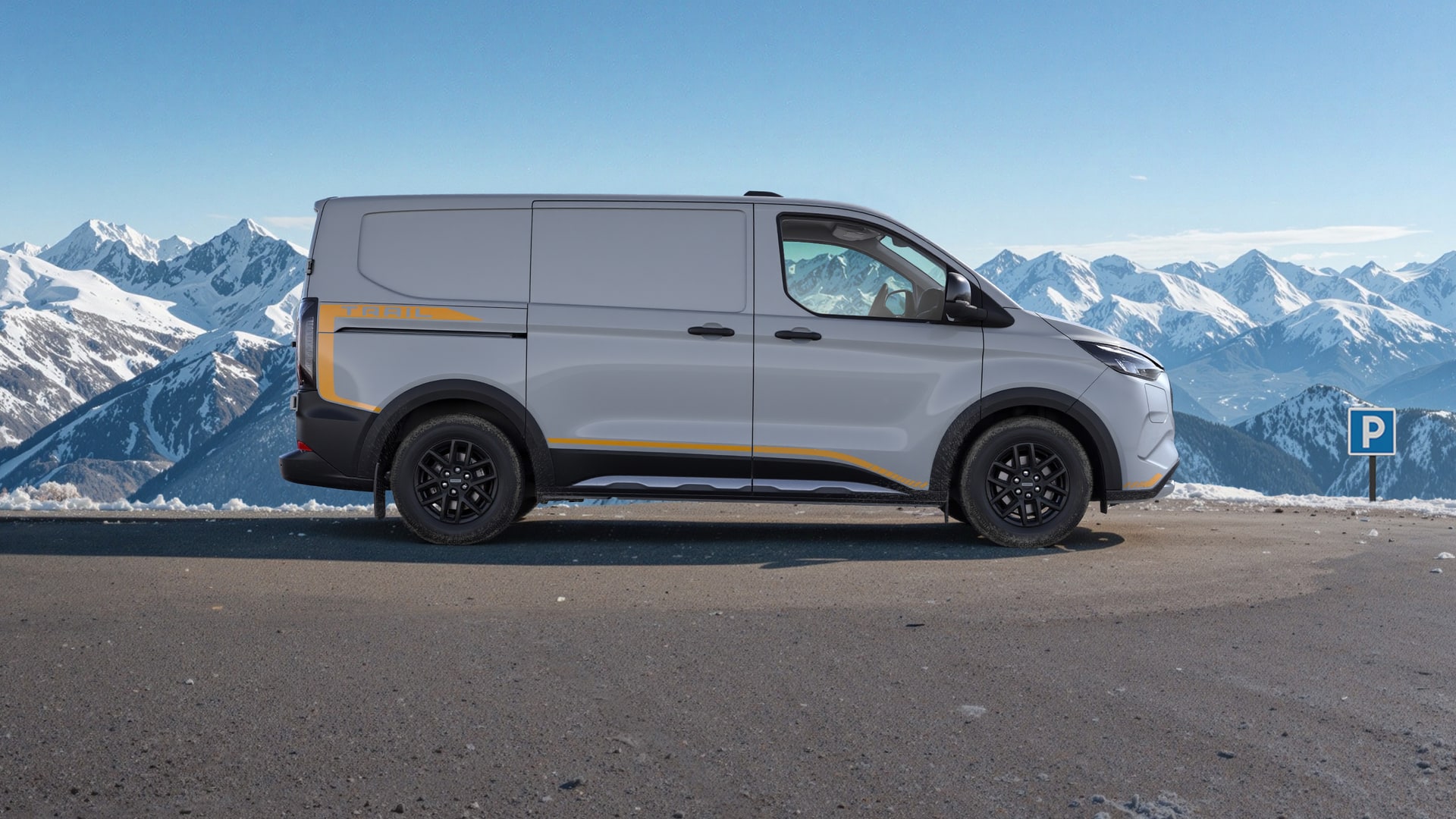
Here we move up a segment and a price point, but also up in capabilities. The E-Transit Custom with a 74 kWh usable battery boasts a WLTP range of up to 337 km with a consumption of around 22 kWh/100 km. For a midsize van with nearly 1.100 kg of payload and 5,8 m³ of cargo volume, that figure is remarkable. Ford Pro also provides after-sales service and a fleet management ecosystem that, in practice, makes a real difference for those with more than two vans on the road.
| Power | WLTP autonomy | Consumption | Golden Label | Fuel Efficiency: |
|---|---|---|---|---|
| 160 kW / 218 PS | 337 km | 22 kWh / 100 km | ZERO | Electric |
5. Mercedes-Benz eVito Van — from €52.000
The eVito isn't the cheapest or the most efficient in pure terms, but it's the best performer of the five when the journey gets longer. It boasts a 60 kWh battery, a WLTP range of 258 km, and a homologated consumption of 26 kWh/100 km. So why is it here? Because in intensive professional use, the Mercedes powertrain ages well, the payload exceeds 900 kg, and the comfort on long days is in a league of its own. It's not for everyone's budget—that much is clear.
| Power | WLTP autonomy | Consumption | Golden Label | Fuel Efficiency: |
|---|---|---|---|---|
| 85 kW / 116 PS | 258 km | 26 kWh / 100 km | ZERO | Electric |
Comparative summary table
| Córdoba | WLTP autonomy | Consumption | price from | Punctuation in Spanish |
|---|---|---|---|---|
| Renault Kangoo E-Tech | 300 km | 18,9 kWh / 100 km | 36.500 € | 9/10 |
| Peugeot e-Partner | 275 km | 20 kWh / 100 km | 35.900 € | 8/10 |
| Citroën ë-Berlingo Van | 275 km | 20 kWh / 100 km | 34.700 € | 8/10 |
| Ford E Transit Custom | 337 km | 22 kWh / 100 km | 49.900 € | 8,5/10 |
| Mercedes-Benz eVito | 258 km | 26 kWh / 100 km | 52.000 € | 7,5/10 |
Which model fits which profile?
Purely urban autonomous driving, less than 100 km per day: the ë-Berlingo Van or the e-Partner are more than adequate. Local deliveries with high volume and a need for agility: Kangoo E-Tech. Routes of 200 km or more per day with bulky goods: E-Transit Custom. Professional fleet with long shifts and a priority on comfort: eVito. If you're still defining your usage profile, the guide by daily mileage ranges will help you avoid making the wrong choice.
FAQ
Which electric van has the best real-world range in 2024?
The Ford E-Transit Custom with the large battery leads in WLTP range among mid-size vans (337 km), and in real-world use it achieves around 280-300 km depending on load and weather conditions. Among small vans, the Renault Kangoo E-Tech delivers the best figures.
Do all electric vans have a ZERO emissions label?
Yes. Any 100% electric vehicle with more than 40 km of range in zero emissions mode automatically obtains the DGT ZERO label, which gives free access to the Low Emission Zones of all Spanish cities.
How much does it cost to charge an electric van per day?
With an average consumption of 20 kWh/100 km and a daily route of 150 km, we're talking about 30 kWh. Charging at a public charging station with the nighttime rate (€0,10-€0,15/kWh) costs around €3-€4,5 per day. Using public fast charging can triple that cost.
Does the Auto+ Plan cover electric vans for self-employed individuals?
Yes, the Auto+ Plan includes subsidies for the purchase of electric light commercial vehicles for self-employed individuals and companies. The amounts and conditions depend on the current call for applications; it's advisable to consult the official website before finalizing the purchase.