
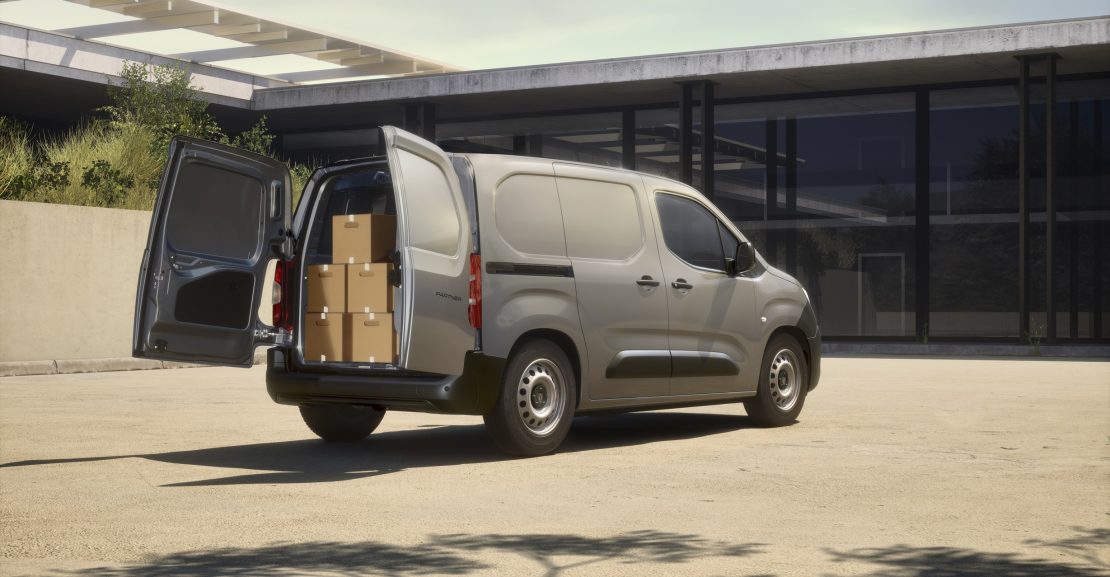
The urban delivery sector in Spain is experiencing a strange moment. Low Emission Zones (LEZs) are tightening restrictions, small diesel vehicles have become significantly more expensive, and small electric vans for self-employed drivers are no longer just a green whim: in many cases, they are the most rational decision for the next five years. But be warned, not all of them are equally profitable. Some models pay for themselves from the first month, while others, on paper, look promising but then prove costly due to their high initial price.
This ranking focuses on what matters: cost, load capacity, battery life, and actual savings when riding around town. No brochures.
Why 2026 is the year of the small electric vehicle in the city
Madrid, Barcelona, Valencia, Seville, Zaragoza… the list of cities with operational Low Emission Zones (LEZs) continues to grow, and the margin for older Euro 6 diesel vehicles is shrinking. Furthermore, the small electric vehicle segment already offers WLTP ranges of between 280 and 340 km, more than enough for a typical urban delivery day (80-140 km in real-world driving, according to data from last-mile delivery fleets).
Price, however, remains the biggest psychological barrier. A small electric vehicle currently starts at around €26.000-€28.000 before subsidies, compared to €19.000-€21.000 for an equivalent diesel. The difference is recouped, but the question is how long it will take.
How we calculated the real profitability
For the calculation, we used a realistic urban autonomous driving scenario: 90 km per day, 22 days per month, mostly charging at charging stations (€0,15/kWh), and an average real-world consumption of 19-22 kWh/100 km. This is compared to a diesel vehicle in the same segment that consumes 6,5 l/100 km at €1,55/l.
Cost per km: electric vs diesel in the city
To put it simply: a small electric car charged at home costs €0,03-€0,035/km in energy alone. A comparable diesel costs around €0,10/km. Multiply that by 25.000 km/year, and you get a difference of about €1.600-€1.700 per year in fuel costs alone. Add maintenance (brakes, oil, filters): another €400-€600 per year in favor of the electric car.
Auto+ Plan subsidies and taxation for the self-employed
The Auto+ Plan replaces the old aid scheme and continues to support the purchase of electric light commercial vehicles. For the self-employed, the VAT deduction (100% if exclusive business use is proven) and accelerated depreciation are significant incentives. It is advisable to consult the official website for the current amount, which is updated with each call for applications.
2026 Ranking: The 6 Most Profitable Small Electric Vans
1. Citroën ë-Berlingo — from €27.500
In our opinion, the e-Berlingo is the practical benchmark in its segment. It offers 3,3 m³ of payload in the short version, a 50 kWh battery, and a WLTP range approaching 330 km. In the city, with a light foot and mild weather, we've seen users achieve 260-280 km in real-world driving. Not bad for a typical day.
The interior is functional, nothing more—the hard plastic is noticeable—but it gets the job done. And the price, with the Auto+ Plan, makes it very competitive.
| Power | WLTP autonomy | Consumption | Golden Label | Fuel Efficiency: |
|---|---|---|---|---|
| 100 kW (136 hp) | 330 km | 19,5 kWh / 100 km | Zero | Electric |
2. Peugeot e-Partner — from €28.200
A close relative of the previous model, it shares the same platform and mechanics, but the e-Partner boasts the i-Cockpit and a slightly more refined interior finish. It has the same 50 kWh battery and the same official range. For self-employed professionals who value brand image over the end customer (installers, technicians who visit clients' homes), this is a plus.
However, the actual difference in usability compared to the Citroën is minimal. Choosing one or the other will depend more on the nearest dealership and the discount you can get.
| Power | WLTP autonomy | Consumption | Golden Label | Fuel Efficiency: |
|---|---|---|---|---|
| 100 kW (136 hp) | 330 km | 19,7 kWh / 100 km | Zero | Electric |
3. Renault Kangoo E-Tech — from €29.900
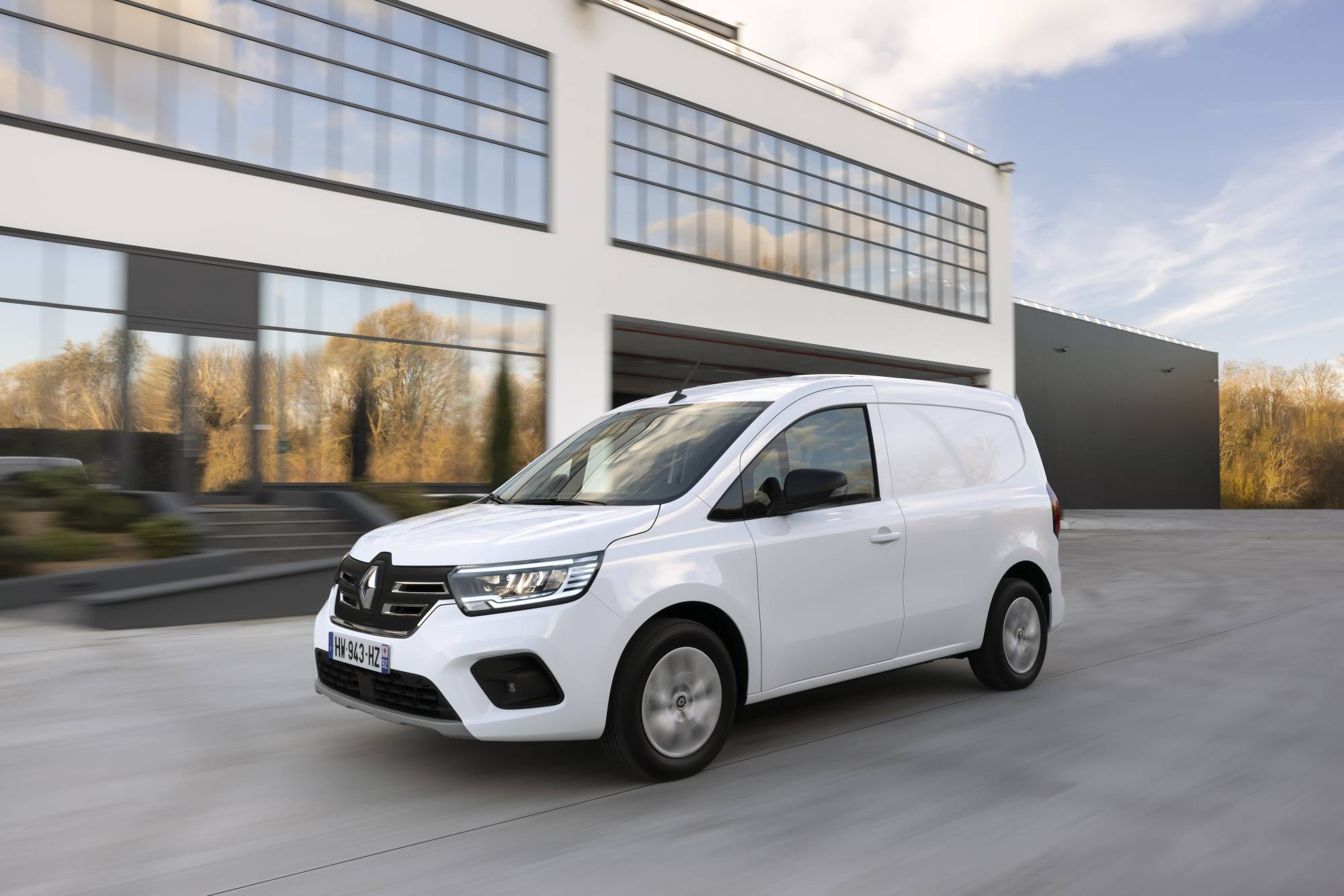
The Kangoo E-Tech has earned the respect of the professional market through its reliability. It boasts a 45 kWh battery, a WLTP range of 285 km, and a payload exceeding 600 kg in the standard version. Renault also offers the option to lease the battery in some configurations—something we already covered in our guide to choosing your first electric van as a self-employed professional , and which some self-employed individuals find makes perfect monthly savings.
| Power | WLTP autonomy | Consumption | Golden Label | Fuel Efficiency: |
|---|---|---|---|---|
| 90 kW (122 hp) | 285 km | 18,8 kWh / 100 km | Zero | Electric |
4. Ford E-Transit Courier — from €30.500
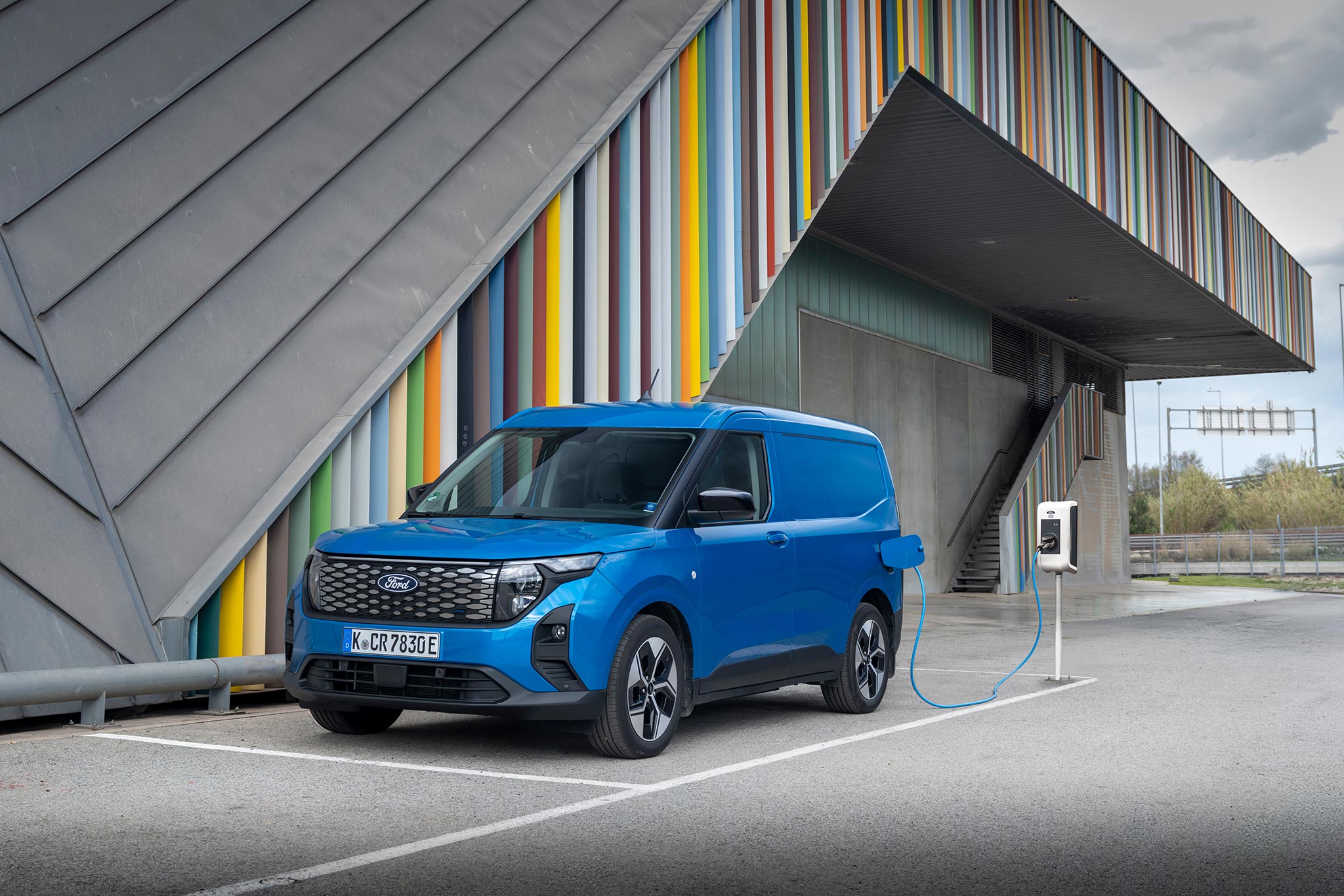
The Ford Pro's smallest model arrives with attitude. It boasts a 43 kWh battery, a WLTP range of approximately 290 km, and competitive payload capacity. The real advantage lies in the Ford Pro ecosystem: connectivity, fleet management, and a service network that is very well-established in Spain. For self-employed individuals who invoice for services and want to monitor mileage, time, and vehicle status via their mobile phone, it offers a valuable benefit.
| Power | WLTP autonomy | Golden Label | Fuel Efficiency: |
|---|---|---|---|
| 100 kW (136 hp) | 290 km | Zero | Electric |
5. Nissan Townstar EV — from €30.200
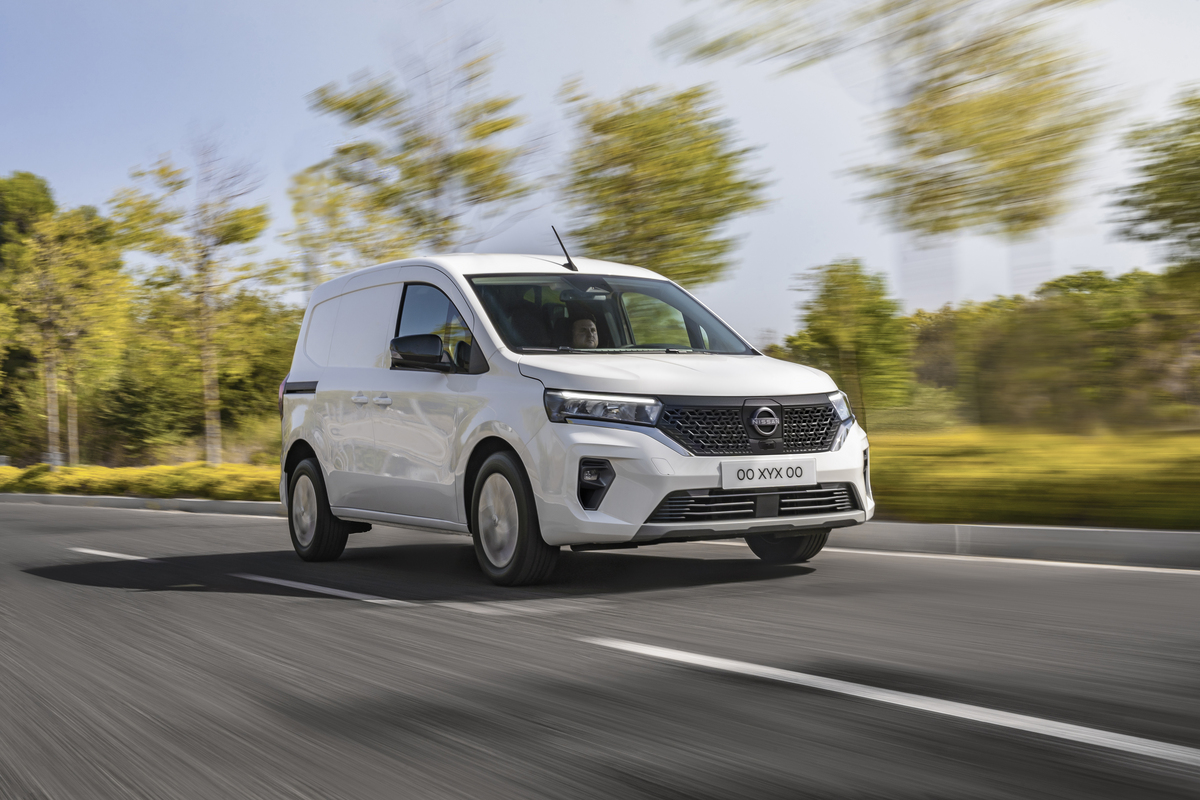
The Townstar EV shares many genes with the Kangoo (the alliance necessitates it), but Nissan has refined it with a more technological focus. It boasts a 45 kWh battery, a 285 km WLTP range, and a more generous array of driver assistance features as standard. For those who frequently enter and exit heavy traffic, the ADAS (Advanced Driver Assistance Systems) are more helpful than you might think.
| Power | WLTP autonomy | Consumption | Golden Label | Fuel Efficiency: |
|---|---|---|---|---|
| 90 kW (122 hp) | 285 km | 18,9 kWh / 100 km | Zero | Electric |
6. Maxus e-Deliver 3 — from €26.900
The Chinese outsider that's disrupting the price. The e-Deliver 3 starts below the competition and offers up to 4,8 m³ of cargo volume in the long version, with a 50 kWh battery and a WLTP range of around 280 km. The drawback? The limited dealer network and perceived resale value. But as a purely practical vehicle, and for those who intend to keep it for 6-8 years, fully amortizing the investment, the numbers work out.
| Power | WLTP autonomy | Golden Label | Fuel Efficiency: |
|---|---|---|---|
| 90 kW (122 hp) | 280 km | Zero | Electric |
Comparative summary table and score
| Córdoba | price from | WLTP autonomy | Load volume | Score /10 |
|---|---|---|---|---|
| Citroen ë-Berlingo | 27.500 € | 330 km | 3,3-4,4 m³ | 8,7 |
| Peugeot e-Partner | 28.200 € | 330 km | 3,3-4,4 m³ | 8,4 |
| Renault Kangoo E-Tech | 29.900 € | 285 km | 3,3-4,2 m³ | 8,2 |
| Ford E-Transit Courier | 30.500 € | 290 km | 2,9 m³ | 8,0 |
| Nissan Townstar EV | 30.200 € | 285 km | 3,3-4,2 m³ | 7,9 |
| Maxus e-Deliver 3 | 26.900 € | 280 km | 4,8 m³ | 7,6 |
Which van to choose based on your urban self-employed profile
If you primarily handle light parcel deliveries with frequent stops, the e-Berlingo or e-Partner offer the best range-to-price ratio. For installers and technicians who need heavy loads and are often seen by clients, the Kangoo E-Tech or Townstar EV project a more professional image and provide a substantial payload. If you're looking for maximum volume for less money and aren't put off by a relatively new brand in Spain, the e-Deliver 3 is the shortcut. And if you want the most mature connected ecosystem, the E-Transit Courier is the way to go.
To delve deeper into the head-to-head comparison of two of them, the Ford E-Transit Courier vs Citroën ë-Berlingo duel breaks down driving and equipment nuances that don't fit here.
FAQ
How many kilometers can a small electric van really withstand in the city?
In pure urban driving, with constant stops and starts, fuel consumption decreases thanks to regenerative braking. The models in the ranking achieve between 240 and 290 real-world kilometers per charge. More than enough for daily commutes of 90-150 km without needing to recharge away from home.
How long will it take to recoup the extra cost compared to an equivalent diesel vehicle?
With 22.000-25.000 km per year in the city and most charging at a charging station, the €5.000-€7.000 extra cost compared to diesel is recovered in around 3,5-4,5 years, not counting the Auto+ Plan subsidy. With the subsidy, the period drops to 2-3 years.
Can I charge an electric van using a standard household outlet?
Yes, but it's the least efficient option. With a 2,3 kW Schuko socket, it will take 20-24 hours to fully charge a 45-50 kWh battery. The sensible solution for a self-employed person is to install a 7,4 kW wallbox at home or their business: a full charge in 6-8 hours.
What is the actual payload capacity of these small electric vans?
Between 500 and 800 kg depending on the model and configuration. The battery reduces capacity compared to the equivalent diesel version, but for urban deliveries, technical service, or courier services, it's more than sufficient. It's advisable to review the details in each model's specifications before signing.